Head and jaw joint therapy in Düsseldorf
Competent treatment for TMJ disorder, headaches and jaw pain
Craniofacial therapy in the heart of Düsseldorf
In the heart of Düsseldorf – right on Königsallee – we treat patients with complaints affecting the head, jaw, and neck. In our modern practice, we combine medical expertise with a professional atmosphere. We take our time, analyze precisely, and employ targeted manual techniques to sustainably improve temporomandibular joint dysfunction and related symptoms.
Craniofacial therapy, also known as head and jaw joint therapy, is a specialization within manual therapy. It is aimed particularly at people with craniomandibular dysfunction (CMD) – that is, functional disorders of the jaw joint, which are often accompanied by headaches, tension, or misalignments. The goal of the treatment is to identify the underlying causes, resolve muscular imbalances, and restore balance to the jaw joint.
Interdisciplinary collaboration and expertise
TMD symptoms often arise from the interplay of various factors. Therefore, we work closely with dentists, ENT specialists, and orthopedists in Düsseldorf, if desired. This collaboration ensures that findings are evaluated across disciplines and that treatment recommendations are seamlessly integrated.
Our treatments are based on sound training in osteopathy and manual therapy, specializing in the head and jaw area. Continuous professional development ensures that we can incorporate the latest scientific findings and treatment methods into our daily work.
How does a treatment proceed?
Scheduling: A session of head and jaw joint therapy typically lasts 50 minutes. The individual course of treatment depends on the type and severity of the symptoms.
Consultation & Medical History: The consultation begins with a detailed discussion. We record your symptoms, possible causes, and relevant pre-existing conditions.
Functional examination: This is followed by a targeted examination of the temporomandibular joint, muscles, neck, and nervous system. We assess mobility, tension patterns, and stress levels.
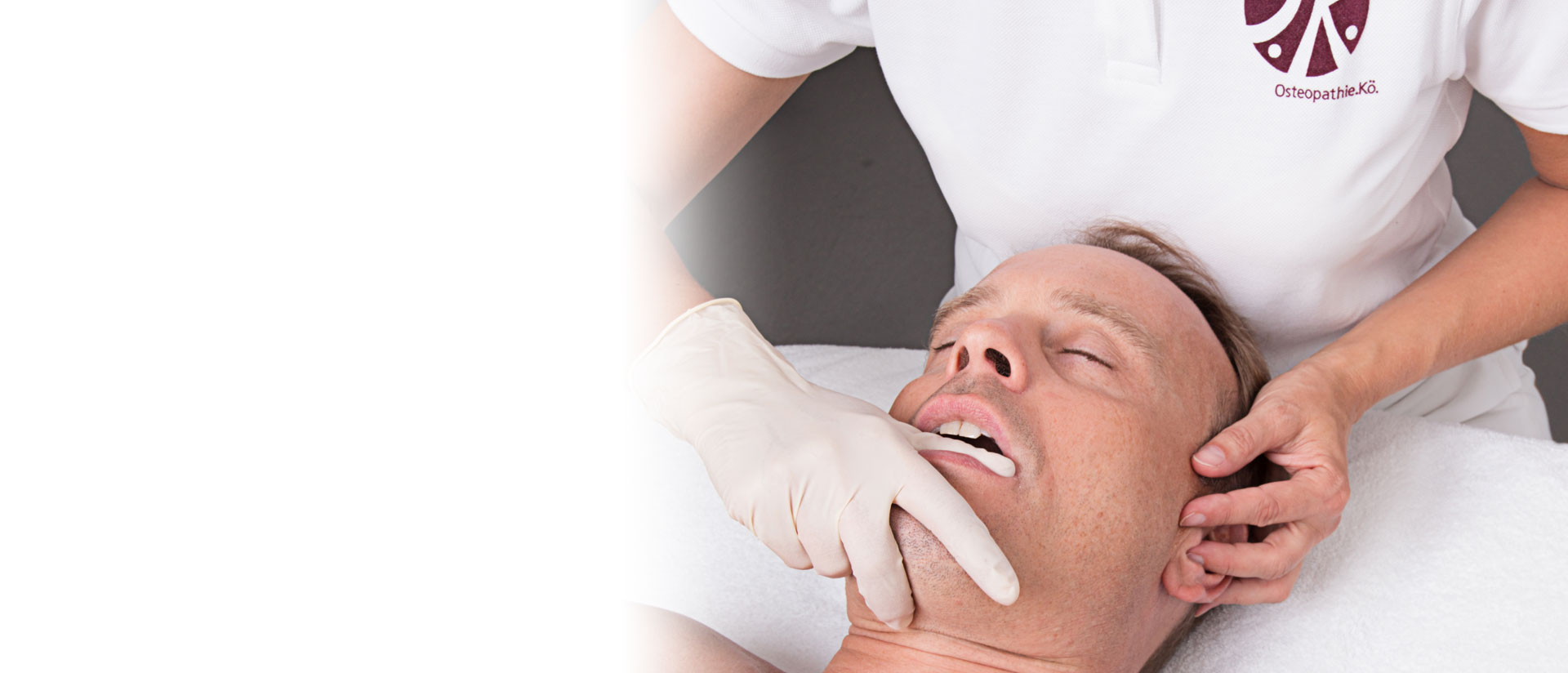
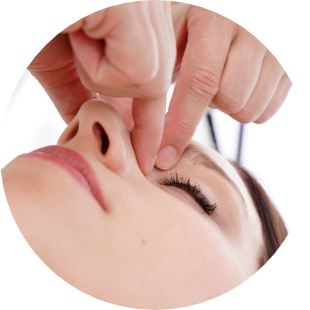
Treatment: The therapy consists of specific manual therapy techniques performed directly on the temporomandibular joint, head, and neck. Joints are mobilized, muscles are relaxed and stabilized – to reduce pain, misalignments, and tension.
Exercise program: In addition, we create an individualized home exercise program. These exercises support the treatment and help to change everyday patterns that contribute to the symptoms.
Interdisciplinary coordination: If necessary, we coordinate with the treating dentists, ENT doctors or orthopedists to optimize the therapy.
Your appointment at Osteopathie.Kö. in Düsseldorf
Our practice Osteopathie.Kö. is centrally located in Düsseldorf, Königsallee 55a – easily accessible from the surrounding districts such as Altstadt, Carlstadt, Pempelfort, Derendorf, Oberkassel, Flingern and Bilk.
Please bring any existing medical reports, dental diagnoses, and a doctor’s prescription to your first appointment. Treatments are only available by prior appointment.
Make appointmentMemberships and trainings
Our practice places great emphasis on sound training and continuous professional development. All our osteopathic therapists are licensed alternative practitioners and physiotherapists with at least 25 years of professional experience. Through memberships in leading professional associations, regular participation in specialized training courses, and the use of modern diagnostic procedures, we combine tradition and innovation in osteopathic practice. This ensures that our patients receive care according to the highest quality standards.
CRAFTA® (Craniofacial Therapy Academy): This is an international program for the treatment of temporomandibular joint, head, and facial disorders. CRAFTA® stands for structured continuing education, high quality standards, and interdisciplinary collaboration with dentists, ENT specialists, and orthopedic surgeons.
FAQ – Frequently Asked Questions about Head and Temporomandibular Joint Therapy
CMD describes a dysfunction of the masticatory system – that is, the temporomandibular joints, masticatory muscles, and adjacent structures. The causes are often multifactorial – including misaligned teeth, bruxism (teeth grinding), stress, or postural problems.
CMD can manifest itself through a variety of symptoms: jaw or facial pain, jaw clicking, restricted mouth opening, headaches, neck and back pain, ringing in the ears (tinnitus), dizziness, tingling in the face, and psychological stress.
TMD symptoms are not always clearly localized. For example, patients often consult an orthopedist for headaches or neck tension, even though the cause lies in the masticatory system – therefore, an interdisciplinary diagnosis is advisable.
Depending on the study, approximately 10% of adults in Germany suffer from CMD symptoms (see Master’s thesis chapter 2.4.2 Epidemiology).
Starting therapy early often improves the outcome. In addition to manual therapy, occlusal splints (e.g., bite splints or DROS® splints), jaw exercises, stress management, relaxation techniques, and interdisciplinary care can be part of the treatment plan.
Specially trained manual therapists – often in combination with osteopathic techniques – mobilize the temporomandibular joints, relax muscles, and promote muscular balance. The effectiveness can be significantly increased when combined with other measures (e.g., splints, relaxation training).
Left untreated, temporomandibular joint dysfunction (TMD) can lead to chronic pain, osteoarthritis of the jaw joint, and functional limitations. Dental damage, muscular imbalances, and psychosomatic symptoms are also possible.